
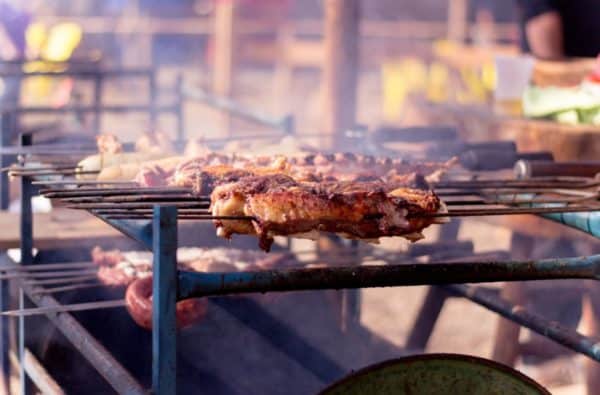
When I was living in Santa Catarina, Brazil, I ate churrasco cooked by people who had been doing it their entire lives. Grandmothers, gauchos, backyard grill masters who treated the espeto the way a carpenter treats a favorite tool. Over two years I watched, asked questions, and ate more skewered meat than I can account for.
What I learned is that churrasco is not complicated. It is focused. The same cuts appear at every fire, perfected over generations, because they work. Here are the nine skewers that define authentic Brazilian churrasco and everything you need to know to cook them at home.
1. Picanha (pee-KAHN-yah)
There is no Brazilian barbecue without picanha. It is not optional. It is the cut.
Picanha is the sirloin cap, a triangular muscle with a thick fat layer that bastes the meat from above as it cooks over the fire. Brazilians fold it into a C-shape on the skewer so the fat cap faces the heat. As the fat renders it drips down through the meat, basting every slice from the inside out.
Season with nothing but coarse sea salt. That is the tradition and it is the right call. The fat and the fire do the rest.
Pull it at 130 to 135 degrees for medium-rare. Let it rest five minutes before slicing against the grain.
Why it works: The fat cap is everything. It keeps the meat moist at high heat and creates a crust that no other cut can match.
2. Fraldinha (frahl-JING-yah)
Fraldinha is Brazilian flank steak, though Brazilian butchers cut it slightly differently than their American counterparts. It is lean, deeply flavored, and one of the cuts I saw most consistently at family churrasco gatherings in Santa Catarina.
Season simply with coarse salt. Some cooks add a light garlic rub but the meat itself carries enough flavor. Cook over medium-high heat to medium-rare and slice thin against the grain immediately after resting.
Why it works: The leanness of fraldinha contrasts beautifully with richer cuts like picanha. On a full churrasco spread, variety matters.
3. Garlic Sirloin (Alcatra com Alho)
Alcatra is the center cut just below picanha on the top sirloin. When prepared as garlic sirloin it becomes one of the most crowd-pleasing skewers at any churrasco.
Cut the sirloin into 1.5-inch cubes. Season generously with coarse salt and press fresh minced garlic into each cube. Skewer and cook over high heat, turning frequently, until you get a beautiful golden sear on all sides. The heat draws the bite out of the raw garlic and leaves a mellow, savory crust.
Why it works: Garlic sirloin is approachable for guests who are newer to churrasco. The familiar flavors are a gateway to the more traditional cuts.
4. Linguiça (lin-GWEE-sah)
Linguiça is a Brazilian pork sausage seasoned with garlic, paprika, and regional spices that vary by maker and by state. In Santa Catarina it tasted different than linguiça in São Paulo. That variation is part of its charm.
Skewer the sausage whole or in links and cook over medium heat, turning regularly. The casing will crisp and the interior will stay juicy. Do not cook over too high a flame or the casing splits and you lose the juices.
Linguiça is often the first thing to disappear at a churrasco. Put more on than you think you need.
Why it works: It is the great equalizer at any gathering. Everyone likes sausage. It gives guests something to eat while the beef finishes cooking.
5. Bacon-Wrapped Sirloin
This one requires a little more preparation but the result is worth it. Take sirloin cut into 1.5-inch cubes and wrap each cube individually with a strip of smoked bacon, securing with the skewer as you go.
The sirloin needs no additional salt because the bacon seasons it throughout the cooking process. Use smoked bacon rather than standard for a deeper flavor profile. Cook over medium heat turning frequently so the bacon renders evenly without burning.
A note on technique: This skewer requires more attention than others. The bacon fat drips and can cause flare-ups over high heat. Keep a close eye and move to a cooler zone if the fire gets aggressive.
Why it works: The bacon creates a self-basting environment around the sirloin, keeping it incredibly moist. It is one of the most satisfying skewers on the grill.
6. Chicken Thigh (Frango)
Bone-in chicken thighs are the standard for churrasco chicken and for good reason. The dark meat holds up to the heat, stays juicy, and takes on smoke flavor better than breast meat.
Marinate in garlic, lime juice, olive oil, salt, and whatever herbs you like for at least two hours, ideally overnight. Cook over medium heat, starting bone side down, and use a two-zone setup where possible. Sear over direct heat then finish over indirect until the internal temperature reaches 165 degrees.
Why it works: Chicken thighs appeal to guests who do not eat red meat and provide a lighter contrast to the beef-heavy lineup. They also fill the grill efficiently between larger cuts.
7. Costela (koh-STEH-lah)
Beef ribs cooked the Brazilian way are a long game. Low and slow over indirect heat for several hours until the meat pulls away from the bone with almost no effort.
Season with coarse salt and a dry rub if you like. Place over indirect heat and leave them alone. Resist the urge to crank the heat. The collagen in beef ribs needs time to break down and when it does the result is extraordinary: rich, tender, deeply flavored meat that defines patience rewarded.
Costela is not a weeknight skewer. It is a commitment. And it is worth every minute.
Why it works: The long cook time and rich collagen content produce a flavor depth that faster cuts cannot achieve. Costela is the centerpiece of a serious churrasco spread.
8. Grilled Pineapple
Every churrasco spread needs grilled pineapple and not just because it is delicious. Pineapple contains bromelain, a natural enzyme that aids in the digestion of protein. Brazilians have known this for generations. Eating a slice of grilled pineapple between rounds of meat is both a palate cleanser and a practical digestive tool.
Peel and core the pineapple. Cut into thick rings or spears. Dust lightly with cinnamon and a pinch of brown sugar if you like, though it is excellent plain. Skewer and cook over high heat until caramelized on both sides.
Serve between the meat courses rather than at the end. That is the Brazilian way.
Why it works: The sweetness and acidity cut through the richness of the beef. It resets the palate and lets guests enjoy more meat than they thought possible.
9. Vegetable Skewer
A well-constructed vegetable skewer is not an afterthought. It is part of the experience.
Zucchini sliced into thick rounds, pearl onions or onion squares, cherry tomatoes, bell pepper triangles, whole mushrooms, and corn on the cob cut into one-inch sections all work beautifully. Place everything in a zip bag with balsamic vinegar, olive oil, salt, and pepper. Marinate for at least an hour.
Skewer carefully so nothing spins or falls. Cook over medium heat turning frequently until the vegetables begin to soften, then finish briefly over high heat for char marks.
Why it works: Vegetable skewers make the spread accessible to non-meat eaters and provide color and freshness to a plate that would otherwise be entirely brown and red.
A Few Notes on Technique
Salt is your seasoning. For the beef cuts, coarse sea salt applied liberally just before cooking is the traditional approach and it works. Resist the impulse to add more. Trust the meat.
Fire zones matter. A single heat level is not enough. You need a high sear zone and a lower finishing zone. This is true on a traditional churrasqueira and it is true on a charcoal kettle grill.
Keep it moving. Brazilian churrasco is not set-it-and-forget-it cooking. The skewers rotate. The meat moves between zones. Attention is part of the technique.
Rest before slicing. Every cut needs five to ten minutes off the fire before you slice it. The juices redistribute and the meat finishes cooking internally. This is not optional.
Frequently Asked Questions About Churrasco Skewers
What is the best cut of meat for churrasco skewers? Picanha is universally considered the essential churrasco cut. It is the most popular cut in Brazil and the one most associated with the tradition. If you cook only one cut, make it picanha.
Do I need special skewers to make churrasco at home? Traditional Brazilian espetos are long metal skewers, typically 24 to 28 inches, designed for use with a churrasqueira. For home cooking on a standard charcoal grill, shorter metal skewers work well. The key is metal, not bamboo, which can burn and split under prolonged heat.
How do I keep churrasco meat from drying out? The fat cap on cuts like picanha is the primary protection against drying out. For leaner cuts like fraldinha, cook to medium-rare and rest properly before slicing. Overcooking is the main cause of dry churrasco.
What temperature should I cook picanha to? Medium-rare is the traditional doneness for picanha. Pull it at an internal temperature of 130 to 135 degrees Fahrenheit and let it rest five minutes before slicing. The exterior will continue cooking slightly during rest.
Can I make churrasco without a Brazilian-style grill? Yes. A standard charcoal kettle grill produces excellent results. The key is using charcoal or hardwood, not gas, and setting up a two-zone fire with a sear zone and a finishing zone. The grill style matters less than the fire source and the technique.
How much meat should I plan per person for churrasco? Plan for roughly three-quarters of a pound of raw meat per person as a starting point. Brazilian churrasco is a long, social meal and people eat more than they expect. Erring on the side of too much is always better than running short.