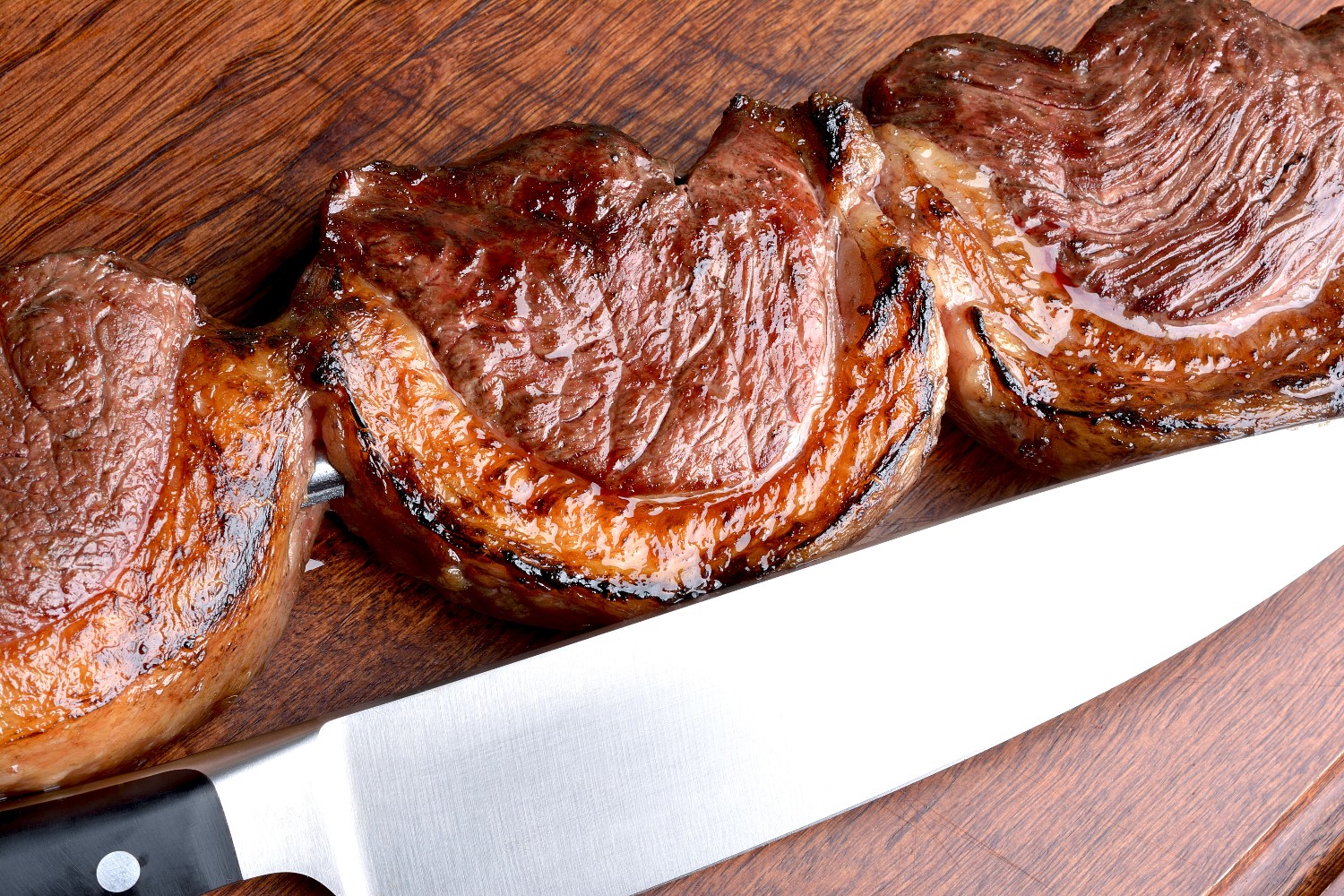
Brazilians call picanha "a rainha das carnes" — the queen of meats.
That's not marketing language; rather, it's what generations of gauchos and backyard cooks across southern Brazil have called this cut. And, after twenty years of cooking it, I have not found a reason to argue with them.
Where the Name Comes From
The word "picanha" comes from a tool, not a place. Brazilian cowboys used a long wooden rod with an iron tip called a picanha to guide cattle through chutes and pastures. The tip of that rod would make contact with a specific spot on the animal, just above the rump. Over time, that spot, and the cut of meat that came from it, took the name of the tool.
So, picanha is literally the place the cattle prod touched. There is something honest about that.
What Picanha Actually Is
Picanha is the cap of the top sirloin, a triangular muscle that sits at the very top of the rump. In American butchery, it sometimes appears as sirloin cap or rump cap, but it is rarely sold intact, the way Brazilian butchers cut it.
The difference is the fat cap. A thick, unbroken layer of fat runs across the top of the muscle. In American supermarkets, this fat is aggressively trimmed before the meat hits the case. In Brazil, trimming that fat cap would be considered a serious mistake. The fat is the entire point.
When picanha is fired over live hardwood coals, the fat slowly renders into the muscle. It drips onto the coals, vaporizes instantly, and rises back through the meat as fat-flavored smoke. The meat flavors the coals, and the coal flavors the meat. This exchange happens continuously throughout the cook and deepens with every passing minute.
You can't replicate that on gas. You need live fire, and you need the fat cap intact. Everything else follows from those two things.
Where Picanha Sits on the Animal
Picanha sits at the top of the sirloin primal, right above the rump. It's a relatively small cut, usually between two to three pounds on a whole piece. Because the muscle does very little work during the animal's life, it remains naturally tender, requiring little aging or complex preparation.
Directly below picanha on the same primal is alcatra, the top sirloin. Below that is maminha, the bottom sirloin. Tri-tip comes from the same general neighborhood. All of them are excellent cuts that we rotate through our weekly menu at The Espeto Grill. Picanha is the one that anchors everything. It is on every plate, every Saturday, without exception.
How Picanha Is Cooked in Traditional Churrasco
Traditional preparation is almost aggressively simple. The fat cap is lightly scored in a crosshatch pattern to help it render. The meat is folded into a C-shape with the fat facing outward, then threaded onto a large espeto skewer. Seasoning is coarse salt only. That is everything.
We don't use a marinade, rub, or sauce. All you need is salt, fire, and patience.
The skewer goes over hardwood charcoal. The meat cooks slowly, rotating to build an even crust while the center stays pink and juicy. When it's ready, it's carved directly off the skewer into thin slices. It's then served immediately.
I learned this method while living in Santa Catarina from 2001 to 2003. I have cooked it the same way for 20 years since then — first in my backyard, then on fishing trips, then at cast parties for the theater, then for neighbors and friends and anyone who would show up on a Saturday afternoon.
At The Espeto Grill, we fire picanha on a custom nine-zone churrasqueira that runs fifty skewers simultaneously. The method is identical with a bigger scale.
Why It Tastes Different Than Any Steak You Have Had
Most people who try picanha cooked properly over hardwood charcoal go quiet for a second after the first bite. Then they ask what cut it is, because they have had sirloin before and it did not taste like this.
The charcoal is doing most of the work. Live coals produce a heat that gas cannot match, and when rendered fat hits those coals, the result is a continuous cycle of smoke, fat, and fire that builds in complexity the longer the cook runs. The meat and the fire are in conversation with each other the entire time.
One of our customers worked at Tucanos Brazilian Grill for years. He came to one of our Saturday cooks, took a bite, and told us ours was better. That is the charcoal talking. And the fat cap. And twenty years of getting it right.
Picanha at The Espeto Grill
Picanha is the first thing we fire every Saturday morning and the last thing we pull when the cook is done. It is on the Two Meat Plate, the Three Meat Plate, and the Festa Pack. Every plate that leaves our kitchen has picanha on it.
We source it with the fat cap fully intact, season it with coarse salt only, and cook it over hardwood charcoal the same way it has been cooked in the south of Brazil for generations.
A rainha das carnes. Order yours by Thursday at 10 p.m. at espetogrill.com.
Frequently Asked Questions About Picanha
What does picanha mean in Portuguese? The word picanha comes from the tool Brazilian cowboys used to guide cattle: a long rod with an iron tip that would make contact with the animal's rump. The cut takes its name from that tool.
Why do Brazilians call picanha the queen of meats? The phrase "a rainha das carnes" reflects picanha's central place in Brazilian churrasco culture. It's the most celebrated cut at any churrascaria and the one that defines the entire tradition of Brazilian barbecue.
Is picanha the same as sirloin cap? Yes. Picanha is the sirloin cap or rump cap in American butchery terminology. The difference is that Brazilian butchers leave the fat cap fully intact, while American supermarkets typically trim it before sale. The fat cap is what makes the cut distinctive.
What makes picanha taste different from regular steak? The fat cap and the cooking method. When picanha is fired over live hardwood coals with the fat cap intact, the fat renders into the meat while dripping onto the coals and rising back as flavored smoke. This continuous cycle produces a depth of flavor that gas cooking cannot replicate.
Where can I try picanha in Utah County? The Espeto Grill serves charcoal-fired picanha every Saturday in Lehi, Utah. Order by Thursday at 10 p.m. at espetogrill.com for Saturday pickup or delivery within our delivery area.