
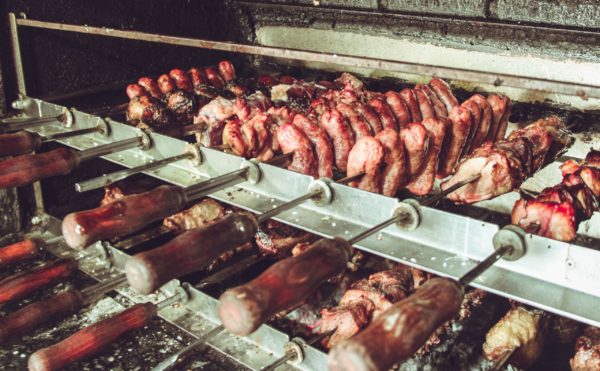
When I first started cooking churrasco at home, I had a set of skewers and no real understanding of what I was holding.
I knew they were long. I knew they were metal. I knew meat went on them. Beyond that I was guessing.
It took years of watching, cooking, and making mistakes before I understood that Brazilian skewers are not just a tool. They are a system. And once you understand how the system works, everything about churrasco starts to make more sense.
What Is a Brazilian Skewer?
A Brazilian skewer, called an espeto in Portuguese, is a long flat metal skewer used to cook meat over an open fire in the churrasco tradition. The word espeto comes from the verb espetar, meaning to skewer or impale.
Unlike round metal skewers or bamboo sticks, the espeto has a flat blade, typically stainless steel, that runs most of its length. That flat blade is not decorative. It is functional in ways that took me a long time to fully appreciate.
The blade holds the meat at a specific angle relative to the fire. It prevents spinning. It distributes heat differently than a round skewer would. And the width of the blade, which varies by size, determines what kind of meat belongs on it and how that meat will cook.
The Three Sizes: Large, Medium, and Small
This is the thing I wish someone had told me at the beginning.
When Brazilian cooks talk about large, medium, and small skewers, they are not talking about the length. All three sizes are roughly the same length, typically 24 to 28 inches. What varies is the width of the blade.
I figured this out gradually by watching at Rodizio Grill and Tucanos, observing which cuts went on which skewers and why. Here is what I learned:
Large Blade Skewers
Large blade skewers are for heavy, thick cuts that need significant structural support on the fire. Picanha is the classic example. A whole picanha folded into a C-shape and placed on a large blade skewer stays put because the wide flat surface gives it something to grip against.
Fraldinha and costela also go on the large. Anything with significant mass and surface area that needs to stay oriented a specific way on the fire.
Before I understood this I was trying to put pineapple on a large skewer and splitting it in half almost every time. The blade was too wide for the pineapple to grip properly. It was the wrong tool for that job.
Medium Blade Skewers
Medium blade skewers are for cuts and items that are substantial but more delicate than a whole picanha. Chicken thighs are the primary example. Grilled pineapple belongs here too, once I figured out that the large was wrong for it.
The medium blade is wide enough to give good support but narrow enough that you are not forcing the blade through something that was not designed to take it. There is a meaningful difference in how cleanly the skewer goes through the meat at this size.
Small Blade Skewers
Small blade skewers are for smaller cuts and items that need precision. Garlic sirloin cubes, bacon-wrapped sirloin, chicken hearts, cut pieces of meat that need to rotate evenly on the fire.
Here is the honest challenge with small skewers: the reduced blade surface makes it harder to keep the meat oriented correctly. On a churrasqueira with a built-in rotisserie this is less of an issue because the rotation is mechanical. Cooking manually, the way I do, you are using the flat of the blade to keep the meat where you want it. Less surface area means less control. You learn to compensate, but it takes practice.
Why the Flat Blade Matters
Most home cooks who try churrasco for the first time use round metal skewers or bamboo sticks. The results are fine but they are missing something.
The flat blade of the espeto does several things a round skewer cannot:
It prevents spinning. When you rotate a round skewer the meat often spins independently on the skewer rather than rotating with it. The flat blade grips the meat and turns it with intention.
It distributes heat along a plane. The flat metal conducts heat differently than a round rod would. The meat cooks more evenly along the length of the blade.
It gives you control over orientation. The flat of the blade is what lets you keep the fat cap on a picanha facing the fire. You are not just turning meat randomly. You are directing where the heat goes and for how long.
Sourcing Brazilian Skewers
My first set came from a Brazilian importer and to this day they are my favorite. There are small differences in the angular cut of the blade, the balance in the hand, the way the handle is finished, that add up to a noticeably better tool. If you can find a Brazilian import source, it is worth the search.
When I wanted to expand my collection I turned to Amazon for bulk orders of small, medium, and large sets, and even a trident style skewer that holds smaller cuts without the pieces sliding together. The Amazon sets function well and the price is right for building volume. I have about 50 skewers in rotation now, a mix of both sources.
The honest difference is feel and precision. The Brazilian import skewers feel like something made intentionally for this specific purpose. The bulk sets are practical and they work. Both will cook good churrasco. One will feel better doing it.
What to look for when buying:
Stainless steel blade, not aluminum
A comfortable handle that does not transfer heat
Flat blade, not round rod
At least 24 inches in length for use over a standard fire
All three sizes if you plan to cook a full churrasco spread
What Goes on Each Skewer: A Quick Reference
Large blade: Picanha, fraldinha, costela, whole cuts of beef that need strong support
Medium blade: Chicken thighs, grilled pineapple, linguiça, larger sausage cuts
Small blade: Garlic sirloin cubes, bacon-wrapped cuts, chicken hearts, smaller portioned meats
Trident style: Smaller items that tend to slide or spin, good for kabob-style cuts
The Espeto and the Fire
Understanding skewer sizes is the first step. The second is understanding how the espeto works in relationship to the fire.
Brazilian churrasco uses a two-zone fire: a high sear zone directly over the coals and a lower finishing zone further from the heat. The espeto moves between these zones throughout the cook. The flat blade is what makes this movement intentional rather than random.
When the fat on a picanha starts rendering and dripping onto the coals, causing flare-ups, you move the skewer to the finishing zone. When the exterior needs more crust you bring it back to the sear zone. The espeto is the instrument through which you conduct this conversation between meat and fire.
Find Us in Lehi
If you are in Utah County and want to experience authentic espeto-style Brazilian churrasco without building your own churrasqueira, The Espeto Grill cooks every Saturday in Lehi over hardwood charcoal. Order by Thursday at 10pm for pickup or delivery within our service area.
The meat is cooked on a custom nine-zone churrasqueira using the same large, medium, and small espeto system described in this post. The difference between a properly used espeto and a round skewer is the same difference you taste in the first bite.
Frequently Asked Questions About Brazilian Skewers
What is an espeto? An espeto is a long flat-bladed metal skewer used in Brazilian churrasco cooking. The word comes from the Portuguese verb espetar, meaning to skewer. The flat blade distinguishes it from round skewers and gives the cook precise control over how the meat sits relative to the fire.
What size Brazilian skewer should I buy first? Start with a medium set if you are cooking chicken thighs and pineapple, which are the most approachable cuts for beginners. Add large skewers when you are ready to cook picanha. Small skewers are useful once you are cooking a full churrasco spread with multiple cuts.
Can I use regular metal skewers for churrasco? Yes, but the results will be different. Round metal skewers allow the meat to spin independently rather than turning with the skewer, and they give you less control over the orientation of the meat relative to the fire. Flat blade espetos produce more consistent results for churrasco specifically.
How long should Brazilian skewers be? Traditional espetos are typically 24 to 28 inches long. This length allows the handle to stay outside the fire zone while the blade and meat sit over the coals. Shorter skewers work on smaller grills but may require the cook to get uncomfortably close to the heat.
Where can I buy authentic Brazilian skewers? Brazilian import stores and specialty online retailers carry traditional espetos. Amazon carries functional bulk sets in small, medium, and large sizes that work well for home cooks building their collection. If you can find a Brazilian import source the quality difference is noticeable, but both will produce good results.
What is a trident skewer? A trident skewer has three prongs rather than a single blade, designed to hold smaller cuts of meat that might slide or spin on a flat skewer. It is useful for garlic sirloin cubes, chicken hearts, and other smaller portioned cuts that need to be held firmly in place during cooking.