
I boarded a plane to Santa Catarina, Brazil in late 2001 as a newly called missionary. I had no idea that two years in southern Brazil would change the way I thought about food forever.
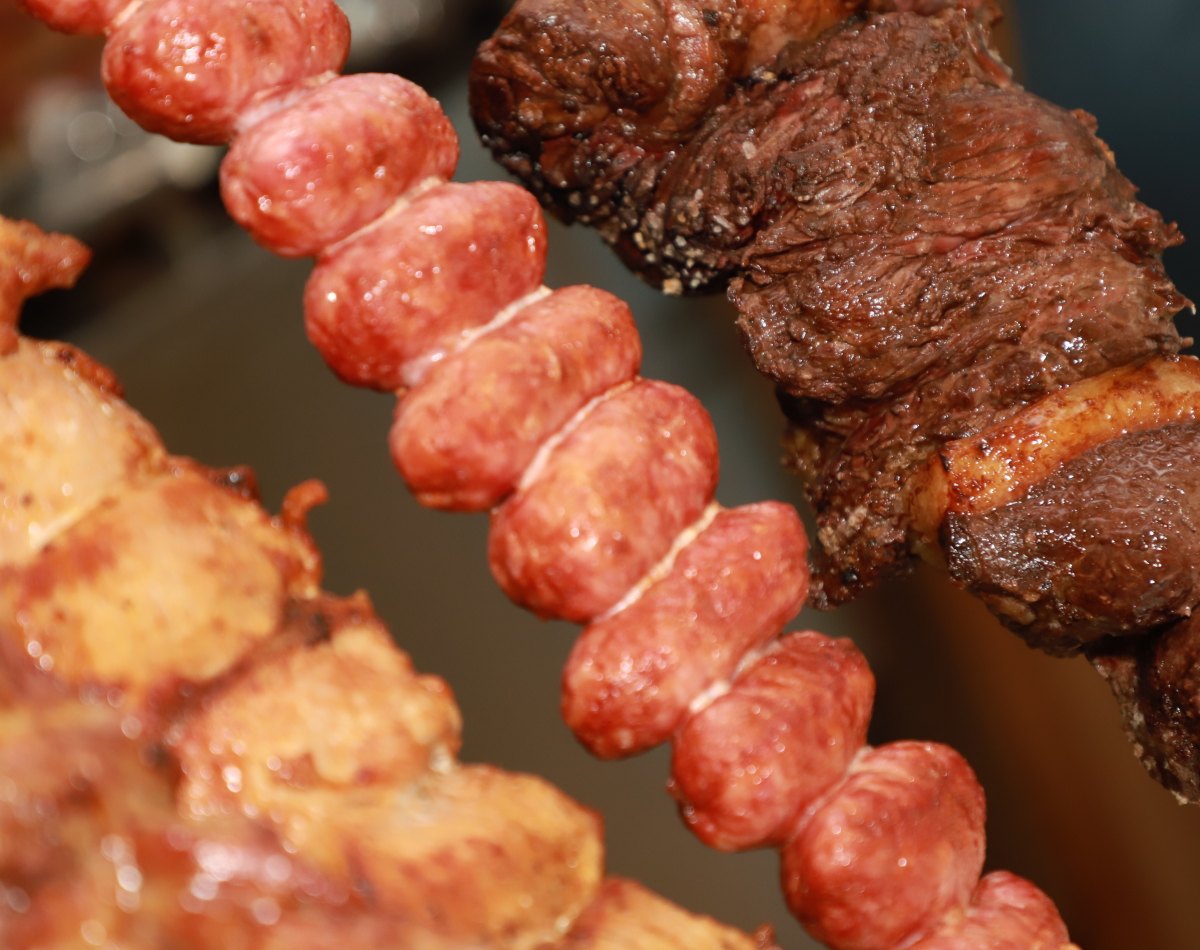
I ate at hundreds of tables during those two years. Restaurant meals, home-cooked feasts from church members, street food from vendors who had been perfecting their craft for decades. And through all of it, one thing kept pulling me back: the fire. The skewers. The smell of picanha searing over hardwood coals.
That was churrasco. And I have spent the better part of 20 years studying it ever since.
The History of Brazilian Barbecue
Brazilian barbecue traces its roots to the Pampas, the vast grasslands of southern Brazil where gauchos, the Brazilian cowboys, drove cattle across open plains. These were working men who needed to eat well and eat simply. Their solution was elegant: impale large cuts of beef on iron skewers, drive them into the ground around an open fire, and let the meat cook slowly over the coals.
The result was something remarkable. Cooking over live fire, low and slow, produced meat that was tender, deeply flavored, and unlike anything you could achieve any other way. The gauchos did not have refrigeration, spice racks, or cooking schools. They had fire, salt, and time. And that was enough.
As churrasco spread from the Pampas into Brazilian culture, it evolved. Cities built dedicated restaurants called churrascarias where rodizio-style service, meaning servers moving through the dining room carrying skewers of meat, became a celebrated dining tradition. The cuts diversified. The seasonings refined. But the soul of churrasco never changed: quality meat, open fire, patience.
Why Brazilian Barbecue Has Gone Global
Churrascarias have opened in cities across the United States, Europe, and Asia over the last two decades. There are good reasons for that.
First, the flavor. Cooking over live fire produces a crust, a char, and a depth of flavor that no oven or gas grill can replicate. When fat from a picanha drips onto hardwood coals and the smoke rises back up through the meat, something happens that is genuinely irreplaceable.
Second, the experience. Churrasco is communal food. It is meant to be shared, passed around, eaten slowly over conversation. In a culture that has increasingly moved toward quick, solitary meals, there is something powerful about a table full of skewers and people who are in no hurry to leave.
Third, the cuts. Brazilian butchers have always known things that American butchers are only recently catching up to. Picanha, fraldinha, costela: these cuts have been celebrated in Brazil for generations while the American market was throwing them away or grinding them into hamburger. As word has spread, demand has followed.
The Essential Cuts of Brazilian Churrasco
If you are new to churrasco, start here. These are the cuts that define the tradition.
Picanha (pee-KAHN-yah)
Picanha is the crown jewel of Brazilian barbecue. Known in the United States as the sirloin cap or top sirloin cap, it is a triangular cut with a thick fat cap that bastes the meat as it cooks. Brazilians fold it into a C-shape on the skewer so the fat cap faces outward, directly over the fire. The result is a crust on the outside and a rosy, juicy interior that defines what beef should taste like.
If you only ever cook one Brazilian cut, make it picanha.
Fraldinha (frahl-JING-yah)
Fraldinha is the Brazilian name for flank steak, though Brazilian butchers cut it slightly differently than their American counterparts. It is lean, intensely flavored, and benefits from simple seasoning. Coarse sea salt is often all it needs. Cook it to medium-rare and slice it thin against the grain.
Linguiça (lin-GWEE-sah)
Linguiça is a pork sausage seasoned with garlic, paprika, and spices that varies by region and by cook. On the espeto it crisps on the outside while staying juicy within. It is crowd-pleasing, approachable, and one of the first things to disappear at any churrasco.
Costela (koh-STEH-lah)
Beef ribs, cooked the Brazilian way, are a commitment. Low heat, long cook times, patience. The result is meat that falls from the bone with almost no effort, rich with collagen and smoke. This is not a cut you rush.
Frango (FRAN-goh)
Chicken on the espeto, particularly bone-in thighs marinated in garlic, lime, and Brazilian spices, is underrated in most American interpretations of churrasco. Done right it is exceptional: crispy skin, juicy meat, and a char that complements the richness of the beef cuts around it.
How to Make Brazilian Barbecue at Home
You do not need a churrascaria budget or a restaurant kitchen. What you need is a commitment to doing a few things right.
Use real fire. Charcoal or hardwood, always. The smoke is not optional. Gas grills are convenient but they will not give you churrasco. They will give you grilled meat, which is a different thing entirely.
Season simply. Coarse sea salt is the foundation of Brazilian seasoning. That is not a starting point, it is often the entire recipe. Let the quality of the meat speak. Picanha does not need a marinade. It needs salt, fire, and time.
Cook slowly. The gauchos were not in a hurry and neither should you be. High heat to start for the crust, then lower and slower to finish. A meat thermometer is your friend. Pull picanha at 130-135 degrees for medium-rare.
Rest the meat. Five to ten minutes under foil after it comes off the fire. Non-negotiable.
Slice against the grain. Particularly for fraldinha. Slice with the grain and you will spend the evening chewing. Slice against it and the meat melts.
Frequently Asked Questions About Brazilian Barbecue
What is the difference between churrasco and regular barbecue? American barbecue typically refers to low-and-slow smoking over indirect heat, often with rubs and sauces. Brazilian churrasco is cooked on skewers over direct fire, seasoned simply with salt, and served continuously from the grill. The experience, the cuts, and the cooking method are all distinct.
What is the most popular cut in Brazilian churrasco? Picanha is universally considered the signature cut of Brazilian churrasco. It is the cut most associated with the tradition and the one most Brazilians would point to as essential. If a churrascaria does not serve picanha, it is not a churrascaria.
Can I make Brazilian barbecue without a special grill? Yes, though a dedicated churrasqueira, the Brazilian-style grill designed for skewer cooking, produces the best results. A standard charcoal kettle grill with skewers works well for home cooks. The key is the fire source, not the hardware.
What does picanha taste like? Picanha has a rich, beefy flavor with a slightly nutty quality from the fat cap. When cooked properly over fire, the exterior develops a crust while the interior stays pink and juicy. It is often described as the most flavorful cut of beef available, with a price point that makes it one of the best values in quality beef.
How is Brazilian barbecue served? Traditionally, churrasco is served rodizio-style, where servers move through the restaurant continuously with skewers and carve meat tableside. At home, it is served family-style directly from the grill, with side dishes like white rice, Brazilian black beans, farofa, and vinaigrette.
What sides are served with churrasco? The classic accompaniments are white rice, Brazilian black beans slow-cooked with bay leaf and garlic, farofa (toasted cassava flour with butter), vinaigrette (a fresh tomato and onion relish), and grilled pineapple. Pao de queijo, Brazilian cheese bread, is a beloved addition.
A Note From The Grill
I built The Espeto Grill because people in Utah County kept tasting my churrasco and asking where they could get more. The answer, for a long time, was nowhere. So I built a nine-zone churrasqueira, spent five years refining my approach to the craft, and started cooking for the neighborhood every Saturday.
This is not restaurant food. It is something better. It is the food I learned to love in Brazil, cooked the way the gauchos intended, in Lehi, Utah.
If you have never tried authentic Brazilian churrasco, I hope you will. And if you have, I hope you will come find us on a Saturday.